
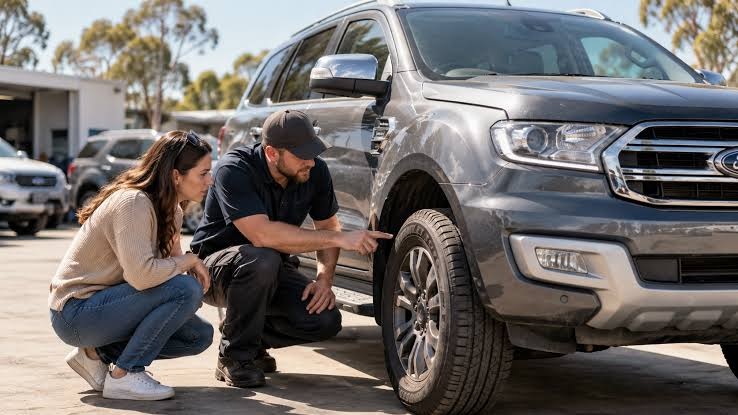
A used Ford Everest may suit Perth drivers seeking additional seating and touring capability, provided the exact vehicle has the required layout and drivetrain. The wrong one can cost a lot if it towed hard, missed oil changes, or spent weekends on the beach. Asking the right questions first makes the good examples easier to spot.
What year and trim is this Everest?
Start with the basics that photos often hide. Everest trim and model year affect what the vehicle has and what it should cost, so get those details clear before talking price.
Listings may include Trend and Sport versions alongside other grades, depending on the vehicle’s age. Platinum versions sit above them with extra comfort and driver-assist kit that does not always show in a thumbnail photo.
Ask for the build date and compliance date, along with proof of the exact badge and factory options. Seating layout and tow pack should be listed in writing. Any modifications should be listed too, since sellers sometimes mix up trim details between model years.
A workshop can advise on maintenance requirements and parts availability for the engine and drivetrain fitted to the candidate vehicle. Different model years and configurations need their own assessment, so judge each vehicle on its specification and condition rather than familiarity with the Everest name.
A late-model Platinum can sit close to new-vehicle money, while an older Trend is a different buy at a lower price point. Knowing the difference helps you avoid overpaying for badges and screens.
What does the service history show?
A stamped logbook alone does not tell enough for a turbo-diesel Everest. Ask to see a complete service record with dates, shop names, km at each visit, and costs.
Regular oil and filter changes matter for diesel life, and the service folder should show work on the transmission, transfer case, differentials, and 4WD system at the right intervals.
Low km helps only when it lines up with the paperwork and the wear you can see. Check seat bolsters, pedals, tires, and the engine bay for signs that do not match the odometer.
Missing records leave questions that an inspection may not fully resolve. Consider how much history is available and whether that uncertainty is acceptable before proceeding.
Ask who did the work and whether parts were genuine or quality aftermarket. An organized folder with invoices for brakes and cooling work, plus tires and batteries, tells you more about the vehicle’s upkeep than a single stamp.
How was it used for towing and off-road trips?
Everests often work hard. The current diesel range is rated to tow up to 3,500kg braked (Ford Australia), so many used examples have pulled caravans or heavy trailers.
Ask straight out if it towed regularly and what weight it pulled. Regular heavy towing gives an inspector reasons to pay particular attention to brakes, cooling, suspension and gearbox condition. A school-run history is not a reason to skip those checks either.
Ask where it drove off road and how often low range was used. A vehicle may have covered long distances on inland gravel or been exposed to salt near the coast. Both leave clues under the body and in the wheel wells.
There’s nothing wrong with a 4WD that went bush, but the price should reflect worn underbody plates or a tired tow hitch. A documented towing history gives an inspector useful context, but does not establish future reliability.
Before you commit, it helps to browse current ford everest for sale perth listings to see how trim and km line up with asking prices for vehicles in this condition.
Does the background and inspection check out?
Check finance and write-off history
A recent PPSR certificate can help identify outstanding finance or a write-off history. A separate history check may be worth considering, particularly for a private sale or if anything feels off.
Match the odometer reading against service invoices and registration papers. Gaps in the timeline or fresh wear on a low-km cabin are red flags that deserve answers.
Book an independent inspection
Don’t skip a pre-purchase inspection on a large 4WD. An independent Perth mechanic can put the Everest on a hoist, scan fault codes, test the 4WD engagement, and road test it cold and hot.
Ask when brakes were last done, along with the age of the tires and battery. Look for rust under doors and watch for the smell of coolant leaks. Small clues add up fast.
Groups like RAC WA do this type of check in Perth, and most good workshops do too. It’s a small expense compared with a diesel repair or a 4WD fault found after payment.
What is the drive-away price and warranty cover?
Ask for the full drive-away figure in writing. That number should cover registration, stamp duty, dealer charges, and on-road costs so you can compare prices on the same basis.
Then pin down the warranty details. A near-new Everest may still have factory cover left, while an older one may come with a dealer warranty for a set term. Get the start date, length, claim limits, and what is excluded.
Don’t accept vague promises about sale inclusions. Ask if the price includes a fresh service and roadworthy check, plus spare keys and owner’s books, and get it on the receipt.
If cover has already ended, ask what options exist and what they cost. Never assume protection carries over.
A suitable Everest should match the household’s actual needs as well as its price range. Give the paperwork and independent inspection more weight than the shine when deciding whether the asking price reflects the vehicle’s condition.
